Showing posts with label High School. Show all posts

Using a Bullet Journal in Your Homeschooling

Monday, June 27, 2016


{Affiliate links used.}


I have been homeschooling for close to fifteen years. It has been quite the journey...one that changes with each semester and child. One of the most important aspects in getting homeschooling done is to be organized and to make sure I plan out our weeks. When there is no plan, not much will get done. Over the years I have used all kinds of homeschool planners. They have been good, but I have noticed that they mostly go unused. That isn't to say that I don't plan out each week, but rather that planners tend to have more pages than I would use. This year I wanted to customize my planner and have only pages I would really utilize. So instead of using a planner I have decided to create a bullet journal to keep us on task.

What is a bullet journal? It is a hand-written way of keeping everything organized. Here is probably the best post on the internet on how to set up a bullet journal. Keep in mind that in this post the author is showing you how to set up a bullet journal to replace your calendar or daytimer. Here I am going to show you how I set up a bullet journal just for our homeschool planning...

To create a bullet journal, you need a few items...a journal, some pens, and a ruler. You can get fancier with decorating it, but remember, that beautiful is not necessarily the goal...functionality is. I do add a little color to my homeschool bullet journal with Prismacolor pencils, but that is about it. As far as the journal goes, this one is my favorite, the Moleskine Squared Notebook (Extra Large), because it has tons of space and the paper in it is like graph paper which makes it easy to set up pages.

Here's a quick look at my set-up:


I start with an index page (actually I give my index about three pages). These pages are vital to any bullet journal as this is where you record where things are in your journal. As I write on another page, I make sure I number the page down at the bottom and then record in the index what is on that page.


The next page in my journal is a "Year-at-a-Glance" page. I start it in July and finish it in June since that works better for the school year. This page is great as you plan throughout the year. You don't have to go looking for another calendar as you setting up your months and weeks.

I then created a page that will list the classes or subjects my son will be doing. It will include space to list the curriculum I will be using for each class.


 After that page, I have a page for grades for the fall semester and another page for the spring. Because my son is high school I have to be more diligent about recording how he is doing. Even so, the only thing I really do is create a row for the class and then record the individual grades in that row. When I need an official grade I will average the numbers for that class.

When we start a new month I will create an overview page for the month. On this page I will write overall goals for the month, days when won't do school, and any special events. I will also include tasks I will need to do for the month in regards to our schooling...like, for example, in July, I will write a list of curricula that I still need to order.


The weekly pages will be the heart of my homeschool bullet journal. Across the side, I list the days of the week; at the top of each column I write the classes (one class per column) and then I can fill out each square on what we need to accomplish in each subject. The weekly spread can be formatted differently if you are homeschooling more than one child or you can create separate weekly spreads for each child. Do what works for you!

So those are some examples of what my bullet journal looks like, but the beauty of a bullet journal is that you can create pages for almost anything! Maybe you need a list of books you are going to read. Or you need a field trip schedule. Maybe you need to have planning pages for a unit study. You can create any type of page you could possibly need!

The Homeschooling Journey: What has worked for us

Sunday, April 10, 2016

{Affiliate links used.}

Years ago I heard Steve Lambert, the publisher of Five in a Row, say that "Homeschooling is a marathon, not a sprint." {I would have to say parenting is the same deal.} For a person that likes to race through all her tasks, these were words I needed to hear. Raising kids is not something you do and then check off your list. It's a lifetime of teaching, helping, and guiding. It doesn't happen overnight. It takes patience and care...and a whole lot of guts!

Over the years, I have tried to remind myself that it is a marathon. I wouldn't be able to teach my boys all they needed to know in a short amount of time. It was going to be fine if they didn't get a concept the first time out. I didn't need to fret if we had a rough day, week, or YEAR. Over time, they would learn and grow. It wouldn't be perfection, but rather a gradual moving forward. These days I have one son in college and the other will be a sophomore in high school in the fall. What Steve mentioned all those years ago is true. It has been a marathon in which to finish you just have to stay to course. We have had successes and failures. I have had to learn that my boys don't learn in the same way. We have had to switch methods and curricula to fit their needs. It hasn't always been pretty, but we have flourished. I am so thankful that we have had the opportunity to grow and learn together...

So as I look back to what has worked, I thought I would compile a list of what we have used to help us along our journey. Not all programs and materials fit all families, but it is my hope that some of these suggestions may help you if you are in the "marathon of homeschooling."

By far, Five in a Row will always be the curriculum I look on in fondness. It is the one that created memories for us in those early years. If there was only one homeschool item I could recommend this would be it! Five in a Row takes  wonderful children's books like Mike Mulligan and His Steam ShovelHow to Make an Apple Pie and See the WorldCranberry Thanksgiving , and Truman's Aunt Farm and uses them to teach lessons for five days {Hence, Five in a Row}. Each day you do a different lesson in a different subject {Social studies/Geography, Applied Math, Science, Language Arts, and Art}. It's best for ages 4-8. All that really needs to be added to your day is math and phonic/reading instruction. I loved this curriculum so much that I have kept the books and the teaching manuals for them! Maybe I will get to use them with grandkids.
Language Arts

Explode the Code- We used books one through six to help the boys learn to read. I loved these books because they were straightforward and easy to implement. The only other thing we added was reading practice with mom.

{Reading Bob Books}

Bob Books are great for new readers! Both my boys read their first books with these. They are simple enough for young readers and yet entertaining!

Reading Rescue 1-2-3: Raise Your Child's Reading Level 2 Grades with This Easy 3-Step Program-One of my boys struggled with reading fluency early on. I read this book and followed the system. It greatly improved my son's reading! Today he is an avid reader! If you have a child that is struggling, this book is worth checking out.

Institute for Excellence in Writing- I LOVE this writing curriculum! We started using it when my oldest was in fourth grade. It has even taught me to be a better writer. By teaching kids ways to "dress-up" their writing, student learn how to vary their sentences. Another key element in this program is learning what information is important and how to take notes. We have used several of the theme-based writing books after teaching my boys the basics of the system.

Progeny Press-We have used these for some of the novels the boys read in junior high and high school. I love the Biblical perspective that is brought out especially if a book touches on hard subjects. However, we haven't used these for every novel. Take a look here at how I teach literature in high school.

Math

Math-U-See- We used this curriculum in the elementary years. It is excellent for the simple fact that kids really get to focus on a concept and learn it well before moving on. We didn't, however, use it in the upper grades. While I think it gives a wonderful foundation for kids, we decided to go with something more rigorous in high school.

Teaching Textbooks- I used this with one of my boys during high school who struggled with math. The teaching is done on the computer {through a set of CD's}. I loved that the program did the grading for me! If you have a student that is struggling in the later years I would highly recommend Teaching Textbooks!

Saxon Math- Ok, I am about to be real...I HATE math. When I was in junior high and high school some of my math was done with Saxon. I detested it! But here's the thing...we are not all the same. Some people do well in math. They don't struggle with it like I did. They can handle a rigorous learning program. If that is the case for your child, then Saxon is the way to go! I have one son that has flourished and done well with Saxon. He has used the  DIVE teaching videos that go along with it, and it has worked for him. Be flexible if you have more than one child...what works for one may not work for another. Also, what didn't work for you in school may be the very thing your child needs!

Social Studies

Biblioplan- When the boys were younger we used this four year plan for history. We loved the literature selections that went with it! I loved that it gave you different options for the "spine" (the core text) that you would read along with the literature. You could choose from programs like Story of the World, The History of US, and Mystery of History.

Notgrass History-We have loved this program for high school. We have done World and American history, economics and government. All of them have been great and come from a Christian perspective. While they do incorporate literature and writing, we have only used them for the social studies aspect.

Science

Apologia- When my boys got too old for Five in a Row, we moved on to Apologia science and have never left. In the early grades, there are the "Exploring Creation With..." books which cover different topics. We have also found the junior high and high school materials to be well worth it! We have used the lab kits that go with each book from Nature's Workshop Plus!

Foreign Languages

I am a certified Spanish teacher, and for years people have been asking me what language curricula I would recommend. We have used Muzzy and Rosetta Stone. While certain aspects of them have been excellent, we struggled with both. Learning another language works best if you have a teacher who knows the language. I know there are some online programs that have language teachers you can access or if you can find someone in your area to teach your kids the language of your choosing that is ideal. For years now, I have taught homeschoolers Spanish. I do have a blog on teaching Spanish. You can check it out here. If you are teaching your kids the basics of Spanish my blog might help give you some ideas.
In the future...

I only have a few more years of homeschooling to go. The marathon is almost over. Here are a few things I am looking at for my youngest as we near the finish line...


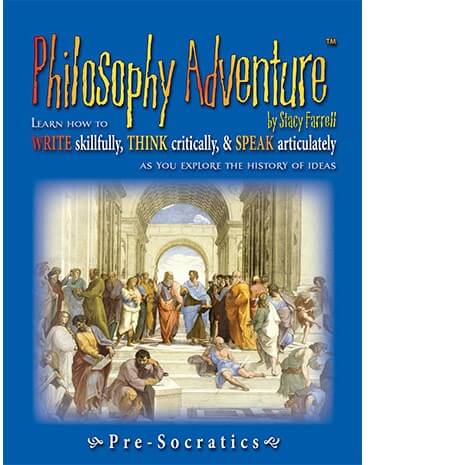
Philosophy Adventure-My son will be using this next year to go along with his World History. I have read through big portions of the curriculum and love it! Through looking at the lives of philosophers, students learn more about what it means to have a Biblical worldview. There are great writing exercises in it also! My son loves everything to do with social studies so this is going to be a great fit for him!

Lightning Literature-I am toying with the idea of using this program {only for the novels we choose} to do British Literature with my son next year. If you have an opinion on it please leave me a comment!!

So what has worked for you and your kids?

What about Delight-Directed Learning in High School?

Sunday, July 26, 2015


Entering the world of homeschooling high school can bring extra work and stress to a mom. There are more obligations to fulfill when you have to make sure your child has enough credits and is getting through all the material they need to receive those credits. So how could there be room for delight-directed learning? How can your teen take time to study what he or she really loves when there are certain requirements to get a diploma?

Delightful learning can happen in high school. It is just a matter of looking for opportunities to creatively follow your teen's interests. Here are a few ideas on how to incorporate delight-directed learning into the high school years...

Join me over at Ben and Me as I discuss how to incorporate "delightful learning" into homeschooling the high school years.


Delight-Directed Learning {A New Series}

Wednesday, July 1, 2015

{Affiliate links used.}

Have you ever heard of delight-directed learning? Basically, it is a way to help your kids learn without realizing they are doing the hard work of learning. It means running with a topic that truly interests them and diving deep into it. Over our years of homeschooling we have used delight-directed learning mostly in the form of unit studies. It was during these times that my boys came alive and were eager to learn more. While there will always be subjects my boys struggle with {like math}, delight-directed learning can help keep them curious about the world and retain that love of learning.

My friend, Marcy, over at Ben and Me is doing a month-long series on how to use direct-delighted learning in July. You can hop over here to see what each day's topic will be. Marcy will have several contributors to these posts {including myself} so you will get to hear from different homeschooling moms and how they incorporate unit studies, rabbit trails, and "delightful" learning into their days with their kids. There will be posts on using curriculum as a jumping off point, gaps in learning, the book basket technique and so much more!

If you are interested, Marcy has also created a planner for this type of learning. Last month I had a chance to go through it and review all the great pages and information she provides. If you are interested in purchasing Delightful Planning, just click here!


I can't wait to read all the posts in this series! How about you? Are you interested in incorporating a bit of delightful learning this coming school year?

Faith-based Reading for Your Teen

Monday, June 8, 2015

{Affiliate links used. Thanks for supporting this blog.}

During the high school years (some of these they read in the Jr. High years) I have my boys read certain books that I feel will guide and grow their faith.  Some of the books are about missionaries' lives.  Others center on dealing with relationships and worldviews.  Here is a list of some of the books that we have found helpful.

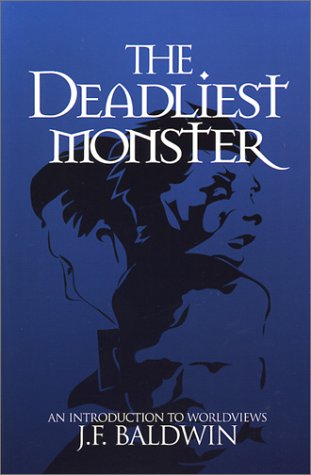
The Deadliest Monster: A Christian Introduction to Worldviews- This book references Frankenstein  and The Strange Case of Dr. Jekyll and Mr. Hyde .  I am going to have both my boys read the two classics and then The Deadliest Monster.  The Deadliest Monster compares and contrasts the worldviews in Frankenstein and Dr. Jekyll.  One of the books is from a Christian worldview whereas the other is not. I found all three books to be fascinating and a great way to introduce to teens that not all worldviews are the same. 

Unglued: Making Wise Choices in the Midst of Raw Emotions- This book is for women, so my boys won't be reading this one.  But I have added it to the list because I think EVERY woman should read it including high school girls.  Women are such emotional creatures, and more often than not we struggle to hold ourselves together.  Here are several of my posts about this awesome book:

The Hiding Place - The true story of Corrie Ten Boom and the truth that "There is no pit so deep that God is deeper still."  This is not only a story of extreme faith, but it would fit in the history category as it deals with World War II and concentration camps.


The Devil in Pew Number Seven. The true story of a little girl's family who was terrorized by a member of their congregation. An excellent story of forgiveness. One of the last chapters talks about forgiveness in detail.

Enemies of the Heart: Breaking Free from the Four Emotions That Control You- This one can be for either guys or girls.  I HIGHLY recommend it!  It has such great information in it that I turned it into a teaching series for the youth I teach at church.  The author, Andy Stanley, goes over anger, guilt, greed, and jealousy and how to deal with them.  It is biblical and yet very practical. Besides teens, I think every adult should read this at least once.

Don't Check Your Brains at the Door- A great book about the "myths" out there concerning Christianity and life in general. The chapters are short and to the point.  Love how this one is written.

Other great reads...

Boy Meets Girl: Say Hello to Courtship

How to be Your Own Selfish Pig: And Other Ways You've Been Brainwashed-Doesn't sound like a Christian title, but it is!

Not a Fan: Becoming a Completely Committed Follower of Jesus

Also, here is a list of Bible reading plans that your teen could possibly use. Also, if you have a strong reader they can take the ultimate challenge of The Bible in 90 Days.

Any other great books that should be added to the list?


Homeschooling High School {Five Ways to Improve Your Teaching}

Monday, June 1, 2015

{Affiliate links used.}

This past May my son walked across the stage as we waited at the other end to give him his diploma. A bittersweet moment. I was excited for him, but also sad that this phase of life for him is over. He will move on as an adult and those things we taught him go with him. Those failures we had as parents will also follow him. As I hand a diploma to one son I will soon turn around in August and start high school all over again with our youngest son. So many lessons came my way as I helped our oldest through high school. Now is the time to evaluate what worked and what didn't before we launch into high school again.


Read more about high school. Even though I am a certified high school teacher and taught seven years in a local high school, I knew I needed to read up more on homeschooling my boys through the teen years. The two books I read through before starting high school with my oldest were The Ultimate Guide to Homeschooling Teens and Senior High: A Home-Designed Form+U+La. The first book gives all kinds of advice on many different subjects like learning styles in teens, coursework, distance learning, and record keeping. The second book is more technical in nature and helped me lay out a four year plan for my son. There are also a plethora of forms in the book to help with planning. This summer I am hoping to re-read parts of these books as I know I have forgotten many of the ideas in them.

Slow down. My personality is one in which I love getting my to-do list done and moving on. I speed through things. The speed method of teaching tends not to work, and I have learned that I need to slow down. For example, when my youngest son doesn't get an algebraic concept the first time around I am now insisting we go back and slowly work through the concept again. When it comes to literature I found it was more valuable to pick a few good novels {like two or three} for the semester and really dig into them instead of racing through a bunch of books.

Discuss more. Towards the end of my oldest high school career I began to see how well he responded to discussion. Whether it was a literature selection or a Biblical concept, discussion seemed to work when writing fell short. Now, don't get me wrong. Writing is integral to learning. Students need to be decent writers by the time high school is done, but I found that discussion helped us get to the heart of the matter and the lessons were more internalized if we verbally processed the information first and had my son write after our conversation. By the last semester of high school, my son was taking only college courses {that counted for dual credit: high school and college}. There were many times he needed us to talk through his papers with him before he could write them. Discussion is also extremely useful when teaching your teen about life in general. It is a great way to transmit your values. If you are a Christian homeschooler, here is an article I wrote for Future Flying Saucers that talks about using discussion in order to help your teen apply God's Word.

Let go and let them be themselves. Sometimes our kids are our opposites. Every thing they do goes counter to how we would handle life. The teen years are a time of letting go and handing over some control {within reason} to your child. Letting them make some decisions on how to manage their time while studying or letting them choose subjects that truly interest them helps create a better environment for learning. You may not always like how they go about the learning process, but realize your teen may be different from you in how they learn. Teach them to run with their strengths and to manage their weaknesses so they don't impede their learning.

Look at the big picture. Anytime I work with my boys during their lessons I try to remind myself there is always a bigger picture. For example, working on algebra isn't just about algebra, but also about paying attention to details or learning to follow through. Writing a composition is more than writing. It is learning how to communicate. It is about learning to organize your thoughts. Playing a sport is more than learning the skills. It is teamwork. It is learning the value of life-long fitness. Realize that as your teach your teen there are hidden lessons happening at all times.


Need some more resources for teaching teens?


Teaching Novels in High School

Tuesday, January 28, 2014


{Affiliate links used.  Thanks for supporting this blog.}

How do you go about teaching a novel to your older kids if you homeschool?  Over the past few years I have been going through different novels with my boys.  My oldest is a junior so we have been through American literature and are currently doing British literature. I have not used a packaged curriculum with their literature studies as every package that I saw didn't fit our needs, either because they had already read some of the books or I didn't want my boys reading some of the selections.  So here is what I have learned over the years on how to go about teaching novels to your kids if you are going to go out on your own without the aid of a specific curriculum.

1. Decide which books you will have your students read.  There are two ways to do this...either read the books yourself to make the decision or create a list based on what others have done.  There are a plethora of lists available on the web.  Here is what we did with British Lit. and American Lit.. I personally think reading the books is so helpful if you are going to teach a novel to your kids, but there are times when you just don't have the time to read.  There are ways to decide on novels without reading them.  You can read summaries to get a feel for what the novel is about.  Also, remember who your teen is before you choose a book.  For example, I knew  my no-nonsense 17 year old would not get through Pride and Prejudice {no matter how much I love it!} without the gnashing of teeth. So we skipped that one.  So try to pick novels that will spark interest.

2.  I normally have read the novel way before I teach it so it has been helpful to use Spark Notes for chapter summaries to review what my son has just read.  These are also helpful for those that haven't read the book. There are other websites besides Spark Notes that can help with summaries, too.

3. In our family, the one way we process through a novel is discussion.  Currently, my son and I are going through Great Expectations. Teaching the Classics is a great resource to use to teach any novel!  It explains all the concepts in literature that you need to teach and also has an extensive list of questions that you can use for discussion with any novel.  However, the parent has to have read the book to go this route.  I personally think this is one of the best ways to go because you really get to interact with your teen and develop deeper thinking skills.  But the reality is that sometimes you need a more "open-and-go" type of curriculum.  Other great resources are Novel Units {The teacher's guides provide vocabulary and discussion questions with answers.} and Progeny Press Study Guides. Progeny Press is great when you want your student to just read and answer questions, but you can also use the guides for discussion.  Another idea is to search the web for discussion questions with answers. There are tons of sites out there that can help.  You just need to do some searching.

4.  Here are ways to work with a novel:
-Discussion
-Essay writing
-Vocabulary work or have your teen list new words and define them as he goes.
-Filling out charts  {Like one for plot with the rising action, climax, conclusion, etc.}
-Watch the movie after reading the book; discuss the difference between the two.
-Discuss the life of the author and historical background of the novel.

Tomorrow another post will be up about what you can use in your novel discussions.